Friday, October 8, 2021

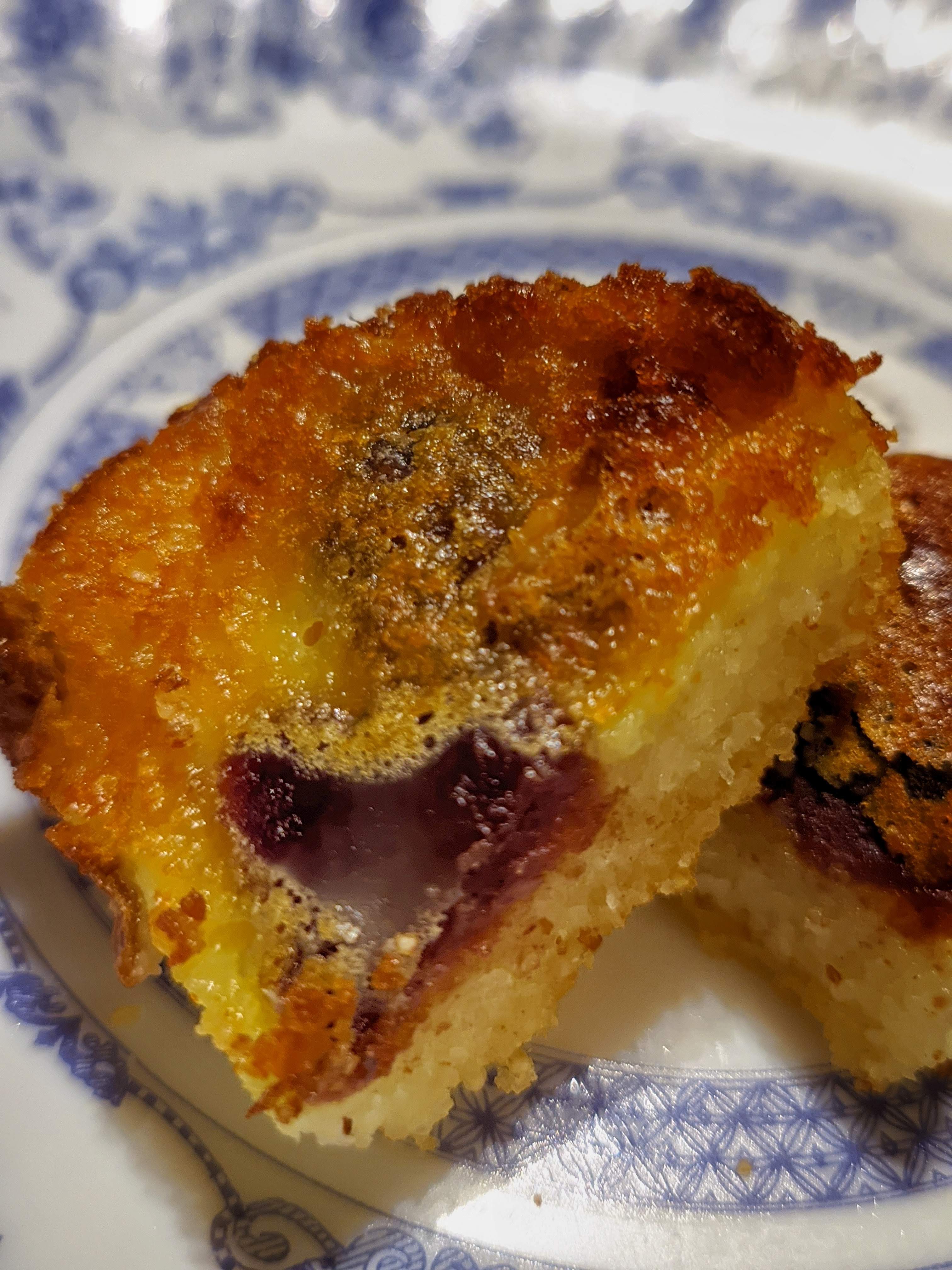
Baked Red Bean Rice Cake (烤红豆年糕)


After Crispy Pork Belly and Porchetta, maybe it's time for a dessert.

Chinese baked red bean rice cake or its variants is a must for Chinese New Year or anytime you feel like a sweet dessert without too much effort :)

The youtube video below also shows how to make sweet red bean from scratch.  For people like me, a trip to any supermarket to buy a can of red bean paste would do just fine.  Yummy!

 Youtube:

Thursday, October 7, 2021

Porchetta (義大利脆皮燒肉)


After making crispy port belly for so many times, I'd wanted to try something difference.  Turn out Porchetta is very similar to the crispy port belly, except seasoned with different ingredients, rolled and tightened with cooking twine.  The main difference, in my humble opinion, is that all the skin of the crispy port belly will be crispy since it is cooked flat while only the top skin of Porchetta will be.

Anyway, it's good to try different cookings.

Youtube video:

Wednesday, October 6, 2021

Crispy Pork Belly (脆皮燒肉)


There are many Youtube videos on how to make crispy pork belly.  As usually, I combined the best from different videos: after boiling the skin of the pork belly for 10 minutes, poking holes on the skin and seasoning the meat on the other side, I used coarse salt to seal the top skin and dried the skin in the fridge for at least a couple of hours although over night was recommended.  The key was to dry the skin so that it would be very crispy.  After pre-heating the over to 400 F, I took the pork belly out from the fridge and straight to the oven for 1 hour.  After that, I removed the salt from the skin and moved the pork belly to the lower level in the oven so that the heat was on the top, then I turned the oven to the High Broil setting.  I let the pork belly sitting there for 10 to 20 minutes or until its skin was brownish and crispy.  During which, I sat next to the oven and made sure to cover portion of the skin that was about to burn with aluminum foil.  That was it.  Enjoy your crispy pork belly.

Youtube videos:

Tuesday, October 5, 2021

Homemade Scallion Pancakes (蔥油餅)


I liked Inga Lam's videos; she made many different dishes I liked from scratch.  Scallion pancake is one of them.

Youtube video:

Monday, October 4, 2021

Homemade Spam Sushi (午餐肉壽司)


Sushi is a traditional Japanese dish made from rice with vinegar and sugar, paired with raw fish such as salmon or tuna.  Together with cucumber and carrots, the rice and fish are wrapped with a black seaweed sheet.  At least that's my understanding of sushi.  Of course, there are many different varieties and I just love them.

On the other hand, I also love spam.  You know, the ones come with metal cans, not those from the emails.  A couple decades ago, I was thinking: what if we could get the best out of both worlds?  Since, Spam Sushi was born!

For sushi, I don't need any youtube video to follow.  It was a long time ago, I might have learned it from a friend verbally and known it by heart since.  I don't care if I'm using the short grain rice; I usually use whatever rice I have in my kitchen.  In my case, usually it means the long one.  I used to use a special vinegar for sushi, now, as long as it's light color vinegar, I'd use it.  When the rice is cooked, while still hot, I would spread some vinegar onto the rice, stir well and balance the sourness with some white sugar.  Beforehand, I would slice the spam, cucumber and carrots into strips.  Last but not least, I would buy some rice seasoning and seaweed sheets online or from a local asian supermarket.

To assembly a sushi roll, I use a bamboo rolling mat.  First, I take a black seaweed sheet out from the package, lay it on top of the bamboo rolling mat.  Then, I spread the rice evenly and thinly on the seaweed sheet followed by a generous layer of the rice seasoning.  After that, I lay two strips of spam head-to-toe because the  seaweed sheet is usually twice as long, followed by two strips of cucumber and carrot, also head-to-toe.  As a last step, I roll the bamboo mat such that all the ingredients are tightly packed within the seaweed sheet.  After that, I repeat the same steps until I run out of the ingredients or patience, whichever comes sooner.

To serve, I usually wet both sides of the knife before cutting the sushi into pieces, and I would repeat wetting the knife after a few cuts.  This is to prevent the rice from sticking on the knife and ruin the subsequent cuts.  For best presentation, I usually trim out the edge pieces of the each sushi roll and make  those disappear entirely in my stomach :)

Sunday, October 3, 2021

Wontons (雲吞)


In the previous blog, I mentioned I followed Inga Lam's homemade dumpling video for the potstickers.  For wontons, I followed the same recipe for the ingredients/fillings.  Instead of making the homemade dumpling skin, I bought a couple of wonton skin packages from an Asian supermarket.  From the pictures, you can tell I was doing the method #6 for wonton wrapping from the "How to wrap wonton" video.

Hmmm... yum!

Youtube:

Saturday, October 2, 2021

Potstickers (鍋貼)


A while ago, Youtube recommended me Inga Lam's youtube channel.  One of the videos stood up: her homemade dumplings.  In the video, she also used the dumplings to make potstickers, which caught my eyes.  

So, I followed her recipes, including the skin and fillings, and made some potstickers.  From the picture above, you could clearly see some burns.  That was definitely something I needed to improve upon.  On the other hand, some actually loved the burns and their extra crispiness.  Maybe the burn was a feature, not a bug after all :)

Youtube video: